
Understanding how a speakers bureau works can save you hours of research, protect you from costly mistakes, and help you land the right speaker for your event. A speakers bureau takes most of the heavy lifting off your plate, whether you are planning a conference, corporate summit, or annual gala.
This guide walks you through every step of the process so you know exactly what to expect before you pick up the phone.
Atlanta Speakers Bureau has connected thousands of event planners with world-class speakers across every topic and industry. We are sharing everything here, including the parts most bureaus keep quiet, like how commissions work and when a bureau is not the right fit. You deserve straight answers, not a sales pitch.
Table of Contents
- What Is a Speakers Bureau
- How a Speakers Bureau Works: The Complete Process
- What a Speakers Bureau Does for Event Planners
- What a Speakers Bureau Does for Professional Speakers
- Speakers Bureau Commission Fees and How They Make Money
- Speakers Bureau vs Booking Agent vs Direct Booking
- How to Use a Speakers Bureau for Your Event
- Should You Join or Work With a Speakers Bureau
What Is a Speakers Bureau
A speakers bureau is a company that acts as the middleman between event planners and professional speakers. Think of it like a talent agency, but built specifically for keynote speakers, workshop leaders, emcees, and moderators. The bureau keeps a roster of vetted speakers and matches them to events based on topic, audience, budget, and fit.
Most bureaus represent dozens to hundreds of speakers across categories like leadership, technology, diversity, motivation, and business strategy. Some focus on a specific niche, like healthcare or sports, while others carry a broad general roster. Traditional bureaus operate with a dedicated team of agents. Newer online platforms work more like a marketplace where planners can browse and request speakers directly.
It is important to know the difference between a traditional speakers bureau, a speaker management agency, and an online booking platform. A traditional bureau represents many speakers and earns a commission on each booking. A speaker management agency works directly for one speaker or a small group and handles all of their business. An online platform connects buyers and speakers but may offer less personal service.
Atlanta Speakers Bureau is a full-service traditional bureau, which means you get a real person guiding you through every step of how a speakers bureau works. Speaker Roster
How a Speakers Bureau Works: The Complete Process
The booking process follows a clear path from your first call to the moment your speaker walks off stage. Most planners are surprised by how smooth it is once a bureau is involved. Here is what the process looks like from start to finish.
Step 1: You reach out with your event details. You contact the bureau and share the basics: your event date, location, audience size, topic, tone, and budget range. The more specific you are here, the better the recommendations you will get back.
Step 2: The bureau reviews its roster and sends recommendations. A good bureau does not just send you a list of names. Your agent digs into the roster and selects speakers who are the right match for your specific audience and goals. You usually receive two to five curated recommendations with bios, speaker reels, and topic overviews.
Step 3: You review materials and request more information. You watch speaker videos, read testimonials, and ask questions. The bureau can arrange a brief introductory call with a speaker if you want to get a feel for their personality before you commit.
Step 4: Fee negotiation and contract terms. Once you land on your speaker, the bureau handles the negotiation. They know the speaker’s standard fee, what flexibility exists, and what the contract should include. You do not have to guess at any of this.
Step 5: Contract execution and logistics coordination. The bureau sends a formal contract, collects deposits, and coordinates logistics like travel, hotel, AV requirements, and run-of-show details. They stay in touch with both you and the speaker through the event.
Step 6: Post-event follow-up. After the event, the bureau checks in, collects feedback, and helps you document what worked. That information helps you make an even better choice the next time you book. The full timeline from first contact to confirmed speaker is typically two to four weeks, though some bookings happen faster when dates are urgent.
What a Speakers Bureau Does for Event Planners
Once you understand how a speakers bureau works, the case for using one becomes obvious. If you have ever tried to book a speaker on your own, you know how much time it takes. You search, you scroll, you watch demo videos, you send emails that go unanswered, and you still are not sure if the person you found is the right fit. A bureau cuts all of that out.
The bureau curates recommendations based on your exact needs. You are not sorting through a database of five hundred speakers hoping to find one that works. Your agent already knows who delivers for audiences like yours and who falls flat. That shortcut alone saves most planners ten to twenty hours of research time.
Beyond the search, the bureau handles negotiation, contract administration, and logistics. They know what a fair fee looks like, what contract terms protect you, and how to handle a speaker’s travel and tech requirements without back-and-forth chaos. They also carry established relationships with speakers, which means your event gets prioritized attention instead of sitting in a cold inbox.
One of the most underrated benefits is risk management. If a speaker cancels last minute, a bureau can often find a qualified replacement faster than you could on your own. They know who is available, who travels reliably, and who has a track record of showing up prepared. That kind of backup plan is hard to build without years of relationships in the industry.
What a Speakers Bureau Does for Professional Speakers
For professional speakers, a bureau is a built-in sales and operations team. Instead of spending time chasing leads and negotiating contracts, a speaker can focus on developing their content and delivering great presentations. The bureau handles the business side so the speaker can focus on their craft.
Bureaus generate consistent booking opportunities by pitching speakers to event planners who are actively looking. A speaker who is well-positioned on a bureau’s roster gets introduced to buyers they never would have found on their own. This is especially valuable for speakers who are still building their brand or breaking into new markets like corporate or association events.
The bureau also protects speakers from scope creep and unfavorable contract terms. Without a bureau, a speaker might agree to add a breakout session or a book signing without extra compensation just to close the deal. A bureau sets clear expectations up front and holds both sides accountable to the terms. They also collect payment and handle invoicing, which keeps the speaker’s business relationships clean and professional.
For established speakers, bureau relationships provide marketing exposure through the bureau’s email list, website, and industry connections. The National Speakers Association notes that bureau relationships remain one of the most reliable channels for high-fee speaking engagements. Getting onto a reputable bureau’s roster is still one of the fastest ways to reach serious event buyers.
Speakers Bureau Commission Fees and How They Make Money
This is the part most bureaus gloss over, so we will be direct about it. Speakers bureaus earn a commission, typically between 20 and 30 percent of the speaker’s fee. In most cases, the commission comes out of what the speaker earns, not an extra charge added on top for the event planner.
So when you see a speaker listed at $10,000, the bureau’s cut is already built into that number.
Some bureaus work on an exclusive basis with certain speakers, meaning that speaker is only bookable through that bureau. Others work on a non-exclusive basis, where a speaker may be represented by multiple bureaus at the same time. Exclusive arrangements sometimes come with better marketing support for the speaker. Non-exclusive arrangements give the speaker more flexibility and wider reach across buyers.
There are situations where additional fees apply. Rush bookings, international events, or highly customized engagements may carry surcharges. Ask your bureau agent to spell out any fees in writing before you sign a contract so there are no surprises. Payment terms vary, but most bureaus collect a deposit at signing and the balance thirty days before the event.
The commission is worth it when you compare it to the cost of a bad booking. One speaker who misses the mark with your audience, arrives unprepared, or cancels at the last minute can cost you far more than a 25 percent commission ever would.
A reputable bureau’s vetting process and accountability are a big part of what you are paying for. The International Association of Speakers Bureaus publishes ethical standards that member bureaus follow, which is a useful benchmark when evaluating who to work with.
Speakers Bureau vs Booking Agent vs Direct Booking
These three options look similar on the surface but work very differently in practice. Understanding the difference helps you choose the right path for your event and budget. Knowing how a speakers bureau works makes it easy to see where it fits and where it does not.
A speakers bureau represents a large roster of speakers across many topics and industries. You go to a bureau when you know what kind of speaker you need but want expert guidance on who fits best. The bureau’s value is in breadth, relationships, and the ability to match you with the right person out of many options.
A booking agent works directly for one speaker or a very small group of speakers. Their job is to get that specific speaker booked as often and at as high a fee as possible. That is the opposite of how a speakers bureau works, where the agent’s goal is to find the best match for your event.
If you already know you want a specific celebrity or high-profile speaker, their booking agent is who you call. You do not get comparison shopping from a booking agent, because their loyalty is to the speaker, not to you.
Direct booking means you find and contract a speaker yourself, cutting out any intermediary. This saves money on commission but costs you time, expertise, and your safety net. It works fine if you have a well-established relationship with the speaker, a small event budget, or strong experience negotiating contracts.
For most planners working with speakers they have not met before, direct booking carries more risk than it is worth. According to MeetingsNet, event planners who use bureaus report significantly higher satisfaction rates with their speaker bookings compared to those who book directly.
| Speakers Bureau | Booking Agent | Direct Booking | |
|---|---|---|---|
| Who They Work For | The event planner finds the best speaker match from a wide roster | Their goal is to get that one person booked at the highest fee | You handle everything yourself with no intermediary |
| Roster Size | Dozens to hundreds of speakers across many topics | One speaker or a very small group | Anyone you find through your own research |
| Cost to Planner | Commission (20–30%) built into the speaker’s quoted fee. There’s no extra charge to you | Commission built into fee. Similar to bureau but negotiated terms may differ | No commission. But your time and any mistakes come at a cost |
| Pros | Expert guidance, curated options, handles contracts and logistics, backup speaker support | Direct access to a specific high-profile speaker, dedicated representation | No commission, full control, works well when you already know the speaker |
| Cons | Commission reduces speaker’s take; some bureaus push available speakers over best-fit ones | No alternatives offered; agent’s loyalty is to the speaker, not your event | Time-intensive, no vetting safety net, higher risk of a bad booking |
| Best For | Most event planners booking speakers they have not worked with before | Planners who already know they want a specific celebrity or name speaker | Small budgets, repeat bookings, or planners with strong speaker negotiation experience |
| Typical Timeline | 2–4 weeks from first contact to confirmed booking | Varies. Celebrity speakers may require months of lead time | Depends entirely on your research speed and the speaker’s availability |
How to Use a Speakers Bureau for Your Event
Getting the most out of a speakers bureau starts before you make your first call. The more prepared you are, the faster your agent can find the right fit and the smoother the whole process runs.
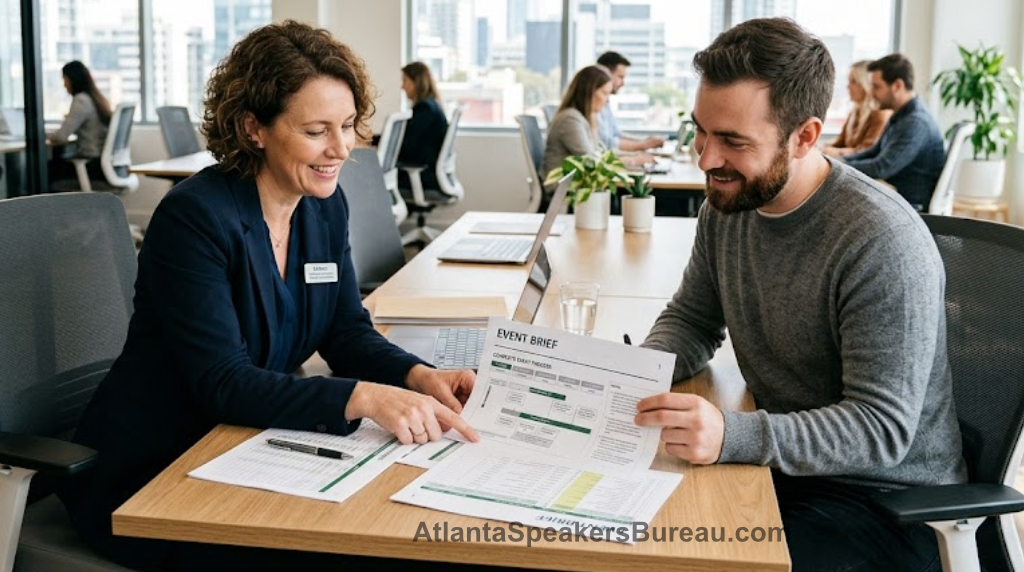
The more you know about how a speakers bureau works before you call, the faster the whole process moves. Start by putting together a clear event brief: your event date, venue city, audience size, job titles or industries your audience represents, and the topic or theme you want addressed.
Also include the tone you are going for, whether that is inspirational, educational, entertaining, or a mix, and your budget range. You do not have to share an exact number, but giving a range helps your agent filter out speakers who are a mismatch from the start.
When you reach out to the bureau, be honest about your constraints. If your budget is firm, say so. If you need a speaker with experience in a specific industry, mention that. If your audience tends to be skeptical or analytical, share that too. The more your agent knows, the better the recommendation they can give you.
As you review speaker recommendations, look beyond the highlight reel. Ask for testimonials from events similar to yours in size and audience type. Ask whether the speaker customizes content or delivers the same keynote everywhere they go. Ask about the cancellation policy and what happens if something goes wrong.
Plan to start your search at least eight to twelve weeks before your event date. That gives you enough time to make a confident choice without rushing.
Should You Join or Work With a Speakers Bureau
If you are a professional speaker wondering whether to pursue bureau representation, the honest answer depends on where you are in your career and what you are trying to build.
For emerging speakers, bureau relationships can be hard to land early on. Most bureaus want to see a solid demo reel, a track record of paid engagements, and a clearly defined topic before they invest time marketing you to buyers.
If you are just getting started, build your independent bookings and reputation first. Once you have ten to twenty paid keynotes under your belt and a polished reel, you are in a much stronger position to approach bureaus and explain how a speakers bureau works in your favor.
For established speakers, understanding how a speakers bureau works on your behalf is what makes the relationship valuable. A bureau gives you access to buyers you cannot reach on your own, validation that comes from being on a reputable roster, and a hands-off way to generate bookings while you focus on your speaking.
The trade-off is the commission, which ranges from 20 to 30 percent. If you are booking at high fees and value the time you get back, that trade is usually worth it.
Before signing with any bureau, ask whether the arrangement is exclusive or non-exclusive, how the bureau markets speakers on its roster, what happens if you want to leave the relationship, and how long the contract runs.
Take your time and read the agreement carefully. Do not sign anything that locks you in for years without a clear exit path. The best bureau relationships are built on trust and mutual benefit, not fine print.
Frequently Asked Questions About How a Speakers Bureau Works
What is the main purpose of a speakers bureau?
A speakers bureau connects event planners with professional speakers. The bureau vets its roster, matches speakers to events based on topic and audience fit, handles contract negotiations, and manages logistics. Its main job is to make the booking process easier and safer for everyone involved.
How does a speakers bureau make money?
Most speakers bureaus earn a commission of 20 to 30 percent of the speaker’s fee. This commission typically comes from the speaker’s end of the payment rather than being added on top of the quote the event planner receives. Some bureaus may charge additional fees for rush bookings or international events.
Do I pay more when I book through a speakers bureau?
In most cases, no. The speaker’s quoted fee already includes the bureau’s commission. You pay the same rate you would see advertised, and the bureau collects its share from the speaker’s side. That said, always ask your bureau agent to confirm exactly how fees are structured so you have no surprises at contract time.
How long does it take to book a speaker through a bureau?
Most bookings are confirmed within two to four weeks from first contact. Simple bookings with a clear brief and flexible budget can move faster. Complex bookings involving international travel, celebrity speakers, or tight timelines may take longer. Starting your search eight to twelve weeks before your event gives you the most room to work comfortably.
What is the difference between a speakers bureau and a booking agent?
A speakers bureau represents many speakers across different topics and helps event planners find the best match. A booking agent works for a single speaker or small group of speakers and focuses on getting that specific person booked. If you want to explore options, use a bureau. If you already know you want a specific speaker, contact their booking agent directly.
Can a speaker be represented by more than one bureau?
Yes. Most speakers have non-exclusive relationships with multiple bureaus, which gives them wider reach across different buyer networks. Some speakers have exclusive arrangements with one bureau, which can come with more focused marketing support. The arrangement varies by speaker and bureau agreement.
How do I know if a speakers bureau is reputable?
Look for bureaus that are members of the International Association of Speakers Bureaus, which holds members to ethical standards. Check for client testimonials, a clearly defined roster, and agents who ask detailed questions about your event rather than pushing whoever is available. A good bureau takes time to understand your needs before making recommendations.
Is it worth using a speakers bureau for a small event?
It depends on your budget and experience. For events with speaker budgets under $5,000 and audiences under 100 people, direct booking or a simpler platform may make more sense. For events where the speaker is a centerpiece of the experience and a bad booking would hurt your organization’s reputation, a bureau’s guidance is usually worth the commission.
0 Comments